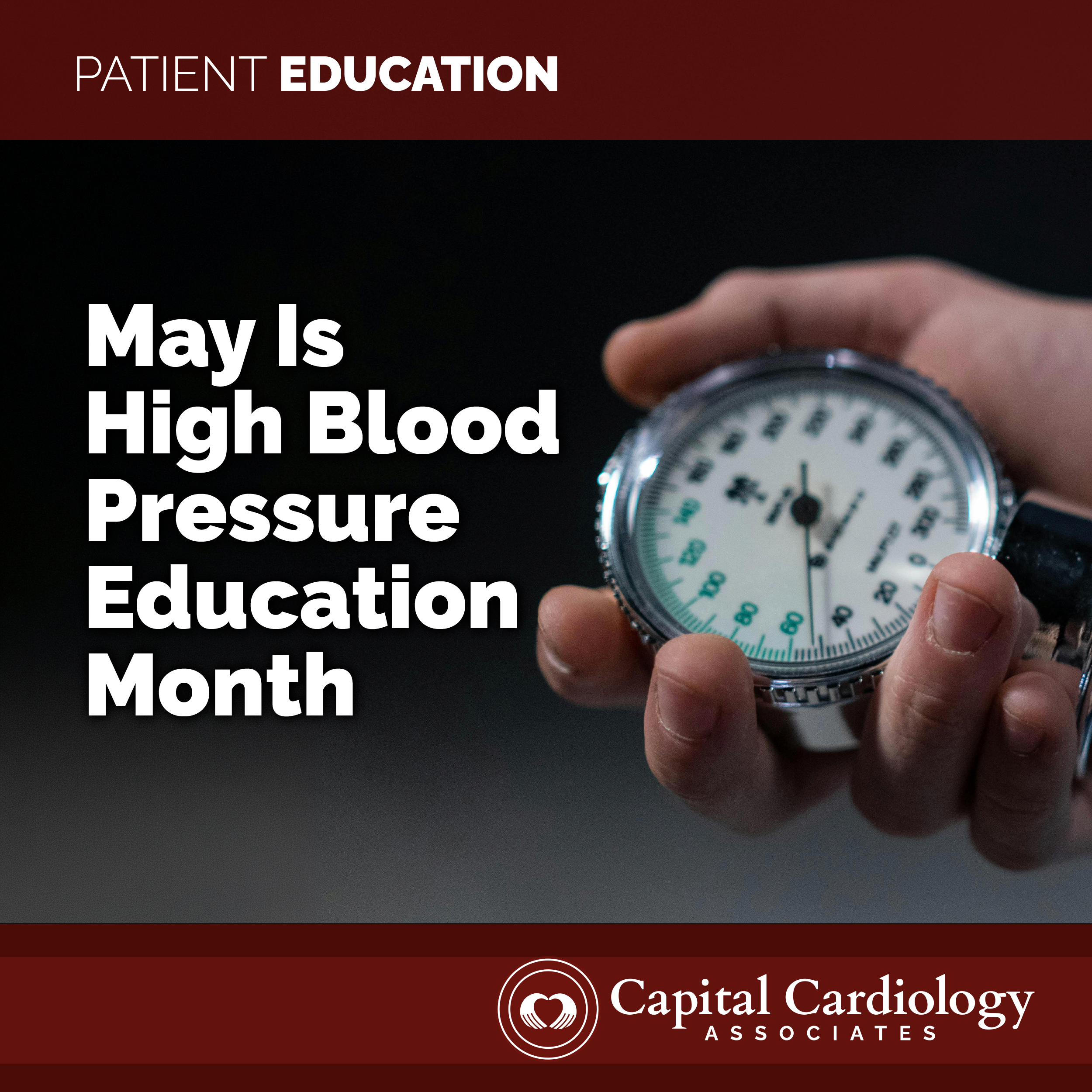
May Is High Blood Pressure Education Month
And We're Here All Month Long
Here's something worth pausing on: nearly half of all Americans have high blood pressure, and many of them have no idea. No symptoms. No warning signs. No obvious signal that anything is wrong. That's why doctors have long called it the silent killer — and it's exactly why May's designation as National High Blood Pressure Education Month matters so much.
At Capital Cardiology Associates, we believe that an informed patient is an empowered patient. So this May, we're doing more than raising awareness — we're giving you real, practical ways to take control of your heart health, one week at a time. All month long, look for our tips, tools, and guidance on managing your blood pressure and living a healthier, heart-smart life.
Why Blood Pressure Deserves Your Attention
Think of your arteries like a garden hose. When the water pressure runs too high for too long, the hose begins to wear down. Your arteries work the same way. When blood pushes against artery walls with too much force — consistently, over time — it quietly damages your heart, kidneys, brain, and eyes, often long before you ever notice anything is wrong.A healthy blood pressure sits below 120/80. When your numbers climb above that on a regular basis, your heart is working harder than it should. And the tricky part? Most people feel perfectly fine. That's what makes high blood pressure so dangerous — and why getting checked is so important.
A two-minute reading can tell you something your body never will on its own.
What We'll Be Sharing This Month
All through May, the team at Capital Cardiology Associates will be featuring weekly content designed to help you manage your blood pressure and build healthier habits for the long haul. Here's a preview of what's coming:
Week 1 — Know Your Numbers: What your blood pressure reading actually means, and what to do if it's high
Week 2 — Eat for Your Heart: Simple food swaps that can make a real difference — without giving up everything you love
Week 3 — Move More, Stress Less: How exercise, sleep, and stress management all connect to your cardiovascular health
Week 4 — When to See a Specialist: Signs that it's time to move beyond lifestyle changes and talk to a cardiologist
Bookmark this blog and check back each week — or follow us on social media so you never miss a post.
The One Thing You Can Do Right Now
Get your blood pressure checked. That's it. Many local pharmacies have free machines you can use in under two minutes. Your primary care doctor can do it at any routine visit. Home monitors are affordable and easy to use.
You might be perfectly fine — and that's a great thing to know. Or you might catch something early, before it has a chance to cause real harm. Either way, knowing your numbers is always better than not knowing.
If your numbers are elevated, or if you've been told you have high blood pressure and want expert guidance on managing it, our team is here. The cardiologists at Capital Cardiology Associates specialize in helping patients understand their cardiovascular health and build plans that fit their real lives — not just a textbook.
This May, take two minutes for your heart. It's been working for you every second of every day — this month, we're helping you work for it. Stay with us all month long at capitalcardiology.com.
Medical Disclaimer
The information provided in this article is for educational and informational purposes only and is not intended as medical advice, diagnosis, or treatment. It should not be used as a substitute for professional medical advice from your physician or other qualified healthcare provider.
Always seek the advice of your doctor or another qualified healthcare professional regarding any questions you may have about your health, blood pressure, or medical condition. Never disregard professional medical advice or delay seeking care because of something you have read here.
If you believe you may have a medical emergency, call 911 or seek immediate medical attention.
While Capital Cardiology Associates strives to provide accurate and up-to-date information, no guarantee is made regarding the completeness or accuracy of the content. Individual health needs vary, and treatment decisions should always be made in consultation with a licensed healthcare provider familiar with your specific medical history.