Know Your Numbers: What Your Blood Pressure Reading Actually Means
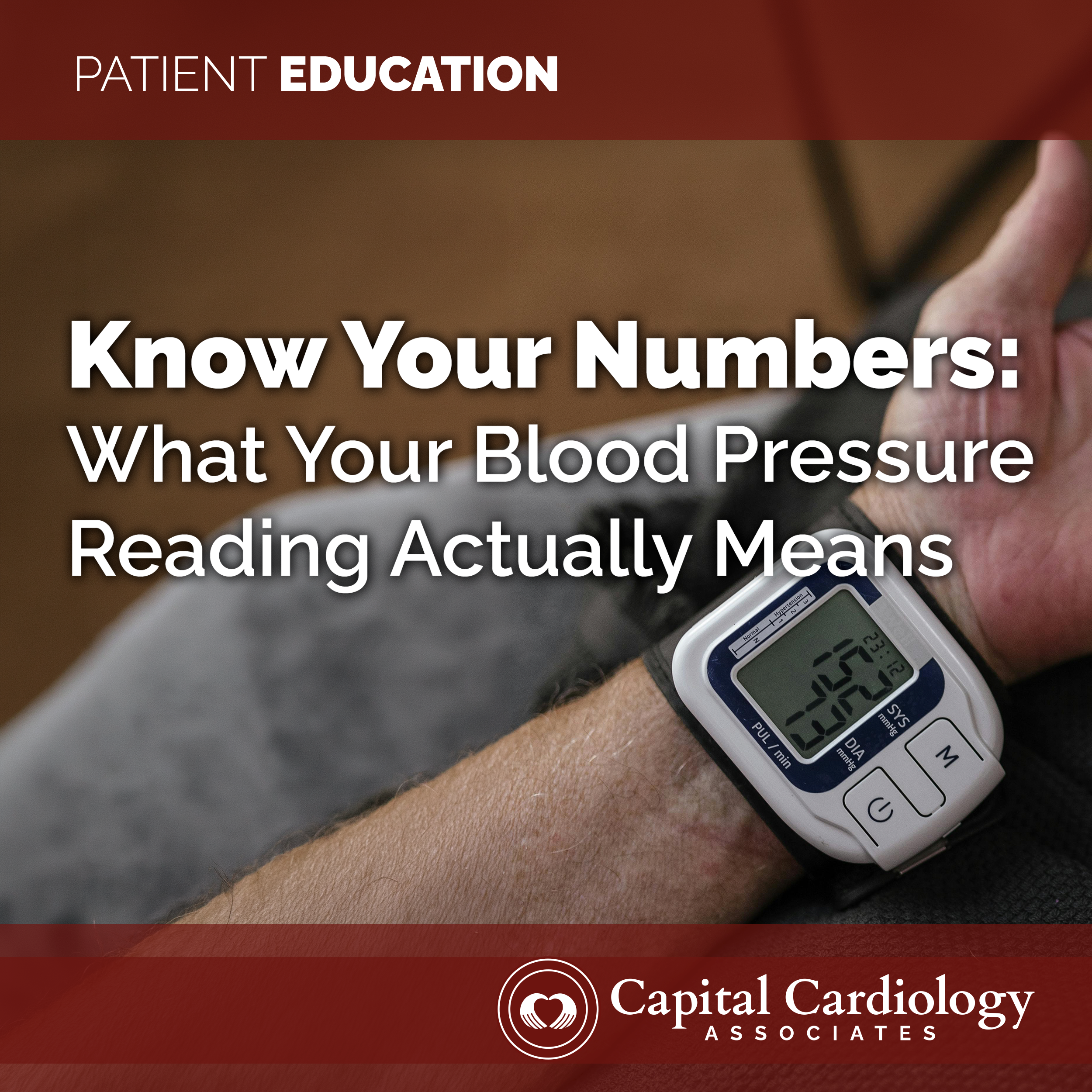
Week 1 of our May High Blood Pressure Education Month Series
You've probably had your blood pressure taken dozens of times — at the doctor's office, at a pharmacy kiosk, maybe even at home. A cuff squeezes your arm, a number appears, and someone says "looks good" or "a little high." But do you know what those numbers actually mean? This week, we're breaking it all down.
The Two Numbers — and Why Both Matter
Every blood pressure reading gives you two numbers, written like a fraction. The top number is your systolic pressure — the force your heart generates each time it beats and pushes blood out into your arteries. The bottom number is your diastolic pressure — the pressure in your arteries between beats, when your heart is at rest and refilling.
Both numbers tell an important story. You need to pay attention to both.
What the Numbers Mean
The following categories reflect current guidelines from the American Heart Association and American College of Cardiology (2025 AHA/ACC Guideline for the Prevention, Detection, Evaluation, and Management of High Blood Pressure in Adults):
Normal: Below 120/80
Elevated: 120–129 / less than 80
High Blood Pressure Stage 1: 130–139 / 80–89
High Blood Pressure Stage 2: 140 or higher / 90 or higher
Severe Hypertension: Higher than 180 and/or higher than 120 — seek emergency care immediately
If your numbers fall in the elevated or high range — even once — it's worth taking seriously. A single high reading doesn't necessarily mean you have hypertension, but it's a signal to monitor more closely and talk to your doctor.
Why One Reading Isn't the Whole Picture
Blood pressure naturally fluctuates throughout the day. It rises when you're stressed, active, or anxious, and drops when you're calm and rested. That's completely normal. What matters is your pattern over time — not a single snapshot.
This is why doctors often ask you to check your blood pressure at home or return for a follow-up reading. White coat hypertension — where numbers spike simply because you're sitting in a doctor's office — is real, and it can lead to unnecessary concern. On the other hand, some people have what's called masked hypertension: their numbers look fine in the office but run high at home or at work. A home monitor and a log of regular readings give your care team a much more accurate picture.
How to Get an Accurate Reading
The way you take your blood pressure matters more than most people realize. Follow these steps to make sure your reading reflects what's actually going on:
Sit quietly for five minutes before measuring
Keep your feet flat on the floor — no crossing your legs
Rest your arm at heart level on a flat surface
Don't talk during the reading
Avoid caffeine, exercise, or smoking for at least 30 minutes beforehand
Take two or three readings, at least one minute apart, and average them
For the most accurate results, use a clinically validated upper arm cuff monitor — wrist monitors tend to be less reliable. Pharmacy kiosks can provide a general sense of your numbers but are not a substitute for a validated home monitor or an in-office reading. For a list of clinically validated blood pressure devices, visit validatebp.org, maintained by the American Medical Association and other leading health organizations.
What to Do If Your Numbers Are High
First — don't panic. High blood pressure is one of the most manageable conditions in medicine. The first step is simply knowing, and you've already taken that step.
If your readings are above 130/80 on more than one occasion, make an appointment with your primary care doctor. Depending on how elevated your numbers are, they may recommend lifestyle changes, medication, or closer monitoring. If your numbers are in the Stage 2 range or higher, don't wait — call sooner rather than later.
Your Next Step
Check your numbers this week. Whether that's at your doctor's office or at home with a validated monitor, take a few minutes to find out where you stand. Write down the reading — both numbers — and the date and time. That single act is the foundation of everything else we'll be sharing this month.
Next week, we're talking about food: what to eat, what to limit, and the simple swaps that can meaningfully move the needle on your blood pressure — without turning your diet upside down.
The cardiologists at Capital Cardiology Associates are here to help you understand your numbers and build a plan that works for your life. If your blood pressure is elevated or you have questions about your cardiovascular health, reach out to our team today.
Sources
Jones DW, Ferdinand KC, Taler SJ, et al. 2025 AHA/ACC/AANP/AAPA/ABC/ACCP/ACPM/AGS/AMA/ASPC/NMA/PCNA/SGIM Guideline for the Prevention, Detection, Evaluation, and Management of High Blood Pressure in Adults. Circulation. 2025. https://www.ahajournals.org/doi/10.1161/CIR.0000000000001356
American Heart Association. Understanding Blood Pressure Readings. https://www.heart.org/en/health-topics/high-blood-pressure/understanding-blood-pressure-readings
American Heart Association. What Are the Signs and Symptoms of High Blood Pressure? https://www.heart.org/en/health-topics/high-blood-pressure/know-your-risk-factors-for-high-blood-pressure/what-are-the-symptoms-of-high-blood-pressure
American Heart Association. Top 10 Things to Know About the AHA/ACC High Blood Pressure Guideline. https://www.heart.org/en/health-topics/high-blood-pressure/the-facts-about-high-blood-pressure/high-bp-top-10
Cleveland Clinic. Hypertensive Crisis: Types, Causes & Symptoms. https://my.clevelandclinic.org/health/diseases/24470-hypertensive-crisis
Mayo Clinic. Hypertensive Crisis: What Are the Symptoms? https://www.mayoclinic.org/diseases-conditions/high-blood-pressure/expert-answers/hypertensive-crisis/faq-20058491
StatPearls / NCBI Bookshelf. Hypertensive Crisis. National Institutes of Health. https://www.ncbi.nlm.nih.gov/books/NBK507701/
American Medical Association / ValidateBP. Validated Blood Pressure Device Listing. https://www.validatebp.org
This article is intended for informational and educational purposes only and does not constitute medical advice. The content provided here is not a substitute for professional medical consultation, diagnosis, or treatment. Always consult your physician or a qualified healthcare provider with any questions you may have regarding a medical condition or before making any changes to your health regimen. If you are experiencing a medical emergency, call 911 or go to your nearest emergency room immediately.