Eat for Your Heart: Small Shifts, Real Result
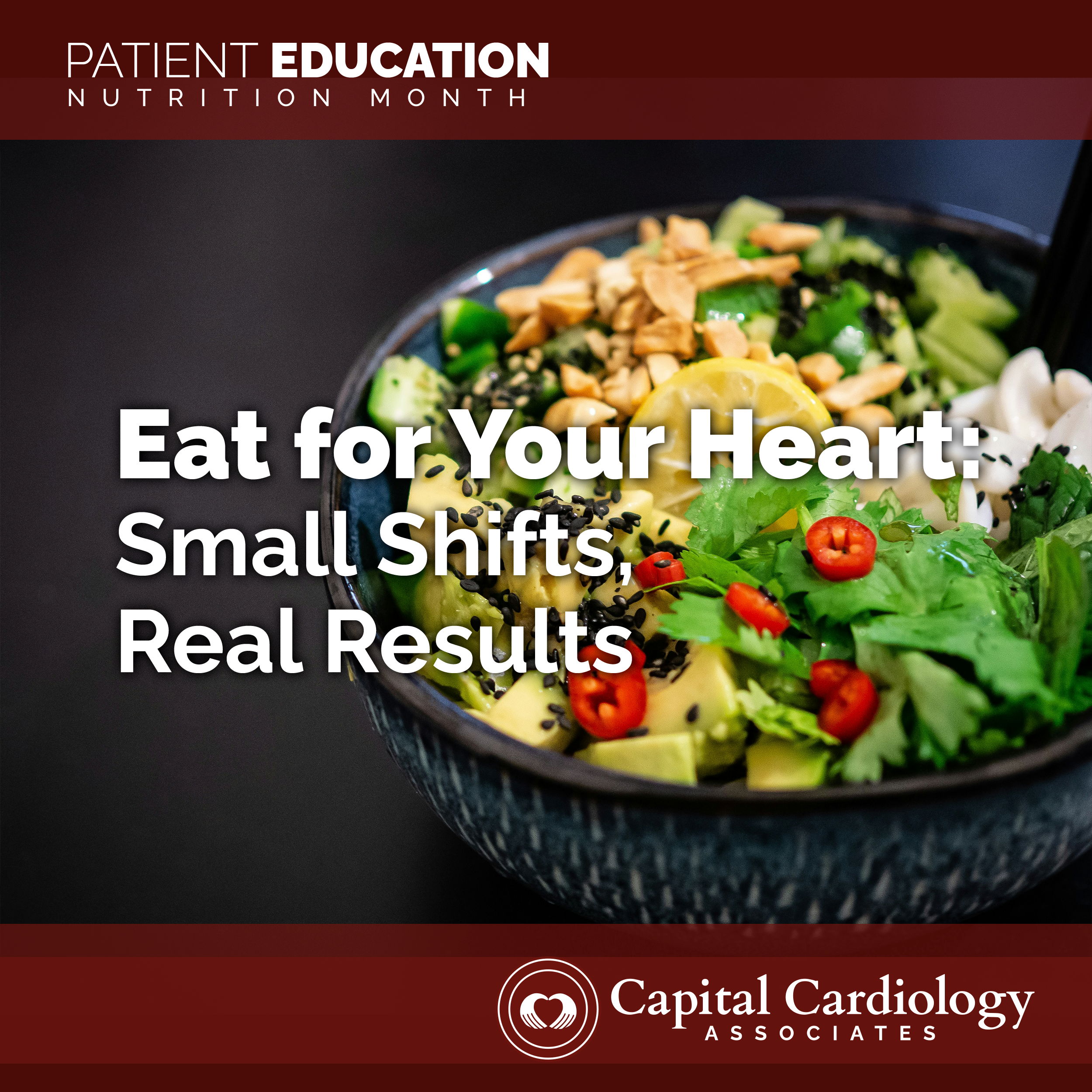
You do not need a complete diet overhaul to protect your heart. A few intentional changes to what you eat every day can add up to something meaningful.
March is National Nutrition Month, and at Capital Cardiology Associates, it is a good reminder that the food on your plate is one of the most powerful tools you have for a healthier heart. The good news: heart-healthy eating is not about perfection or deprivation. It is about making better choices more often.
Start with what you add, not what you cut
Most people approach eating well by thinking about what to eliminate. Flip that. Start by crowding your plate with more vegetables, more fiber, and more whole foods. When half your plate is filled with colorful produce, there is simply less room for the things your heart does not need as much of, like excess sodium, saturated fat, and processed sugar.
Foods rich in fiber, such as oats, beans, lentils, and leafy greens, actively support healthy cholesterol levels. Fatty fish like salmon and sardines deliver omega-3 fatty acids that help reduce inflammation and protect heart rhythm. Nuts, olive oil, and avocado provide healthy fats that your cardiovascular system genuinely benefits from.
Watch the sodium, even when it hides
Sodium is one of the biggest contributors to high blood pressure, and most of it does not come from a saltshaker at the table. It lives in processed foods, canned soups, deli meats, condiments, and restaurant meals. Reading nutrition labels and choosing low-sodium versions of pantry staples is one of the simplest changes you can make with a real payoff for your blood pressure.
The American Heart Association recommends no more than 2,300 milligrams of sodium per day for most adults, with an ideal target closer to 1,500 mg for people managing hypertension.
Three changes you can make this week
Swap refined grains for whole grains. Choose brown rice, whole wheat bread, and oats over their white counterparts. The fiber content alone makes a difference for both cholesterol and blood sugar stability.
Add one plant-based meal per week. A bean chili, a lentil soup, or a vegetable stir-fry gives your heart a break from saturated fat while delivering nutrients most Americans do not get enough of.
Rethink your snack. Swap chips or crackers for a small handful of unsalted nuts, a piece of fruit, or sliced vegetables with hummus. These choices support steady energy and reduce the blood pressure spikes that come with salty, processed snacks.
You do not need to change everything at once. Sustainable heart health is built one meal, one choice, one habit at a time. This Nutrition Month, pick one shift and start there. Your heart will notice.
Questions about your diet and heart health? Talk to your Capital Cardiology Associates provider at your next visit.
The information in this article is intended for general educational purposes and does not constitute medical advice. Individual nutritional needs vary. Please consult your Capital Cardiology Associates provider before making significant changes to your diet, especially if you have an existing heart condition, diabetes, kidney disease, or are currently taking medication.