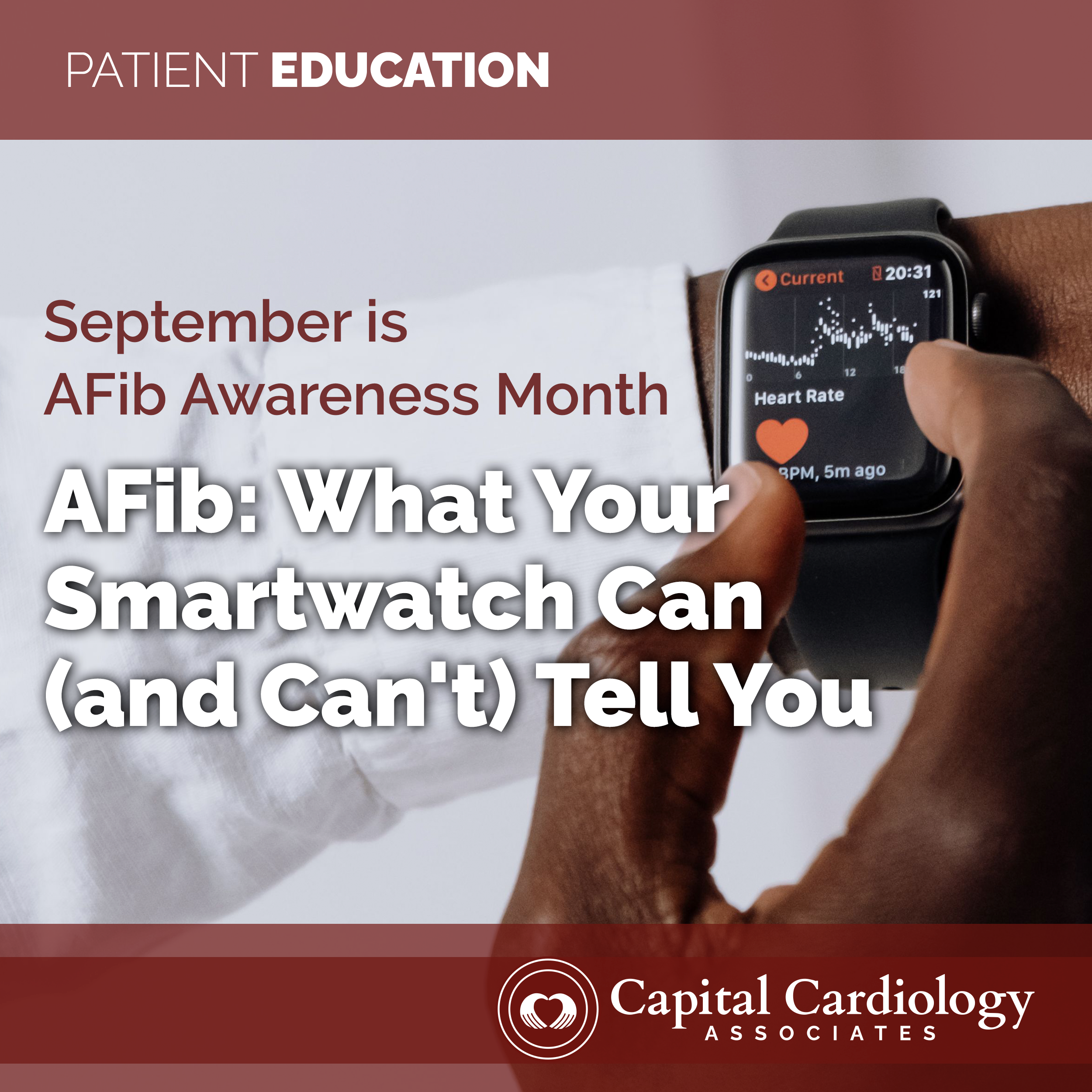
September is AFib Awareness Month, and if you own a smartwatch or fitness tracker, there's a good chance it's already capable of flagging one of the warning signs.
Atrial fibrillation, or AFib, is an irregular heart rhythm that increases the risk of stroke. It's one of the most common heart rhythm disorders in the U.S., and it doesn't always announce itself clearly. Some people feel it as fluttering in the chest, fatigue or shortness of breath. Others feel nothing at all.
Why wearables have changed the conversation
In recent years, consumer technology has made it easier for people to notice possible irregular rhythms on their own. Many smartwatches now include this capability built in, and standalone personal ECG devices, small enough to keep in a pocket or on a keychain, can be used anytime a person feels something off. Together, these tools can flag a rhythm that looks like AFib, prompting the wearer to pay closer attention.
That's a meaningful development. But it's important to be precise about what these devices actually do.
A wearable alert is not a diagnosis. It's a signal, and signals are only useful when they lead somewhere. The real value of that notification is what it can start: a conversation with your doctor, backed by data your doctor didn't have access to a decade ago.
What to do if your device flags something
If your watch or ECG device suggests an irregular rhythm, don't panic and don't ignore it. Instead:
Note when it happened and what you were doing at the time.
Pay attention to whether you felt any symptoms, such as fluttering, dizziness or shortness of breath.
If your device lets you save or export the reading, bring that record with you so you can share it directly with your doctor.
Share the reading with your doctor at your next visit, or sooner if the symptoms are new or severe.
Let a cardiologist determine whether further testing, such as a clinical ECG or extended monitoring, is needed.
Your device gathered a data point. Your care team turns that data point into an answer.
The takeaway
Your watch doesn't replace your doctor, but it can do something your doctor can't: watch continuously and notice something worth checking.
That distinction matters, both medically and practically. Treating a device alert as a diagnosis could lead to unnecessary anxiety or, just as easily, false reassurance if a device doesn't flag anything at all. The right response to any wearable alert is the same one Capital Cardiology Associates recommends for any new or unusual symptom: talk to a clinician who can put it in context.
Know the Signs — Walk-In Cardiac Care Now Available
Capital Cardiology Associates now offers Enhanced Cardiac Access walk-in clinics in Albany, Clifton Park, and Niskayuna. If your device has flagged a possible irregular rhythm, or if you've noticed symptoms like a racing or fluttering heartbeat, fatigue, or shortness of breath, schedule an appointment with Capital Cardiology Associates. Early evaluation is one of the most effective tools we have against AFib-related stroke risk.
Medical Disclaimer
This article is provided for general educational and informational purposes only and does not constitute medical advice, diagnosis, or treatment. Consumer wearable devices and personal ECG monitors are not substitutes for clinical evaluation and are not FDA-cleared to diagnose atrial fibrillation or any other medical condition on their own. A notification from a smartwatch or personal ECG device, or the absence of one, should never be used to rule a heart condition in or out.
If you experience symptoms such as chest pain, fainting, severe shortness of breath, or a rapid or irregular heartbeat that does not resolve, seek emergency medical care immediately by calling 911 or going to the nearest emergency room. Do not wait for a device alert or a scheduled appointment.
Capital Cardiology Associates is not responsible for decisions made solely on the basis of consumer device data. Only a qualified healthcare provider can evaluate your individual symptoms, medical history, and test results to determine an accurate diagnosis and appropriate treatment plan. Always consult your physician or a licensed cardiologist before making any decisions related to your heart health.
By John Bulmer, Public Information Officer, Capital Cardiology Associates